
Key takeaways
- A transfer between your own entities is still a cross-border payment - it faces the same cut-offs, correspondent banks, and weekend closures as any other
- A stablecoin transfer reduces reliance on correspondent banks - the value moves between regulated wallets held for each entity, often with a single FX conversion, on any day
- The legal and tax character of the flow doesn't change - a loan, dividend, or service charge keeps its treatment whichever rail carries it
- Agree the accounting first - the classification of stablecoin balances is still being settled, so take it to your auditors before the first transfer
How cash is moved between entities today
Most multinational groups run a separate entity in each market, each with its own local bank accounts. Treasury funds those entities through intercompany loans, sweeps surplus cash back to headquarters through cash pooling, and nets off what entities owe each other. Because cash takes time to arrive, it also forecasts what each subsidiary will need and funds it ahead of payroll, supplier runs, and tax payments.
Within one country, most of this is automated and quick. Once cash has to cross a border, it runs into the same rails as any other international payment.
Why moving cash between your own entities takes days
Moving cash from a subsidiary in one country to a subsidiary in another is a cross-border payment like any other, with the same delays and fees. It usually passes through a chain of banks, and each one adds time and cost.
Sweeps have to clear before local cut-offs, which can fall well before the end of the business day, and correspondent wires largely stop at weekends and on public holidays. In markets with capital controls, regulatory reviews and compliance screening slow the payment down further.
FX adds another cost as well. Conversions can happen at more than one point along the chain, usually at a rate the treasury only sees after the event, and where the receiving provider converts the currency its margin averages 0.7% to 1.1%, taking a larger share of the total cost as payments grow.
Moving cash between two entities with stablecoins
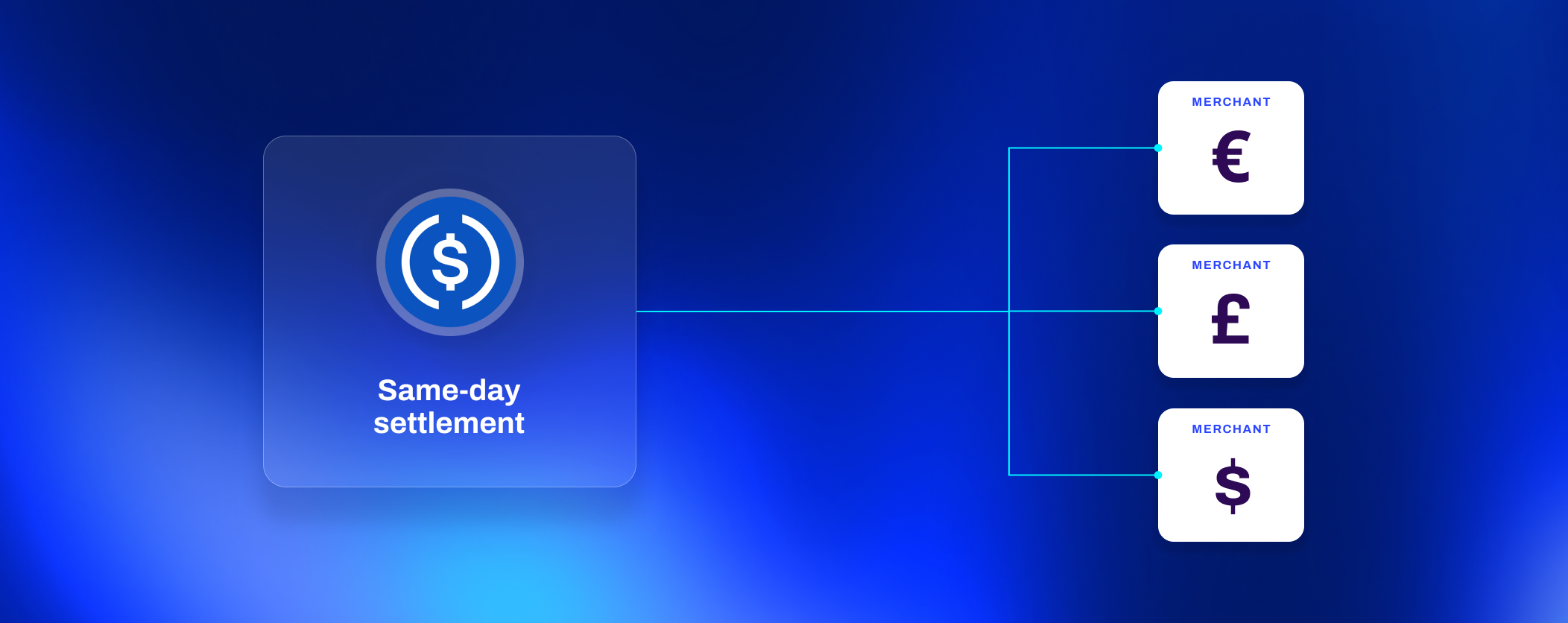
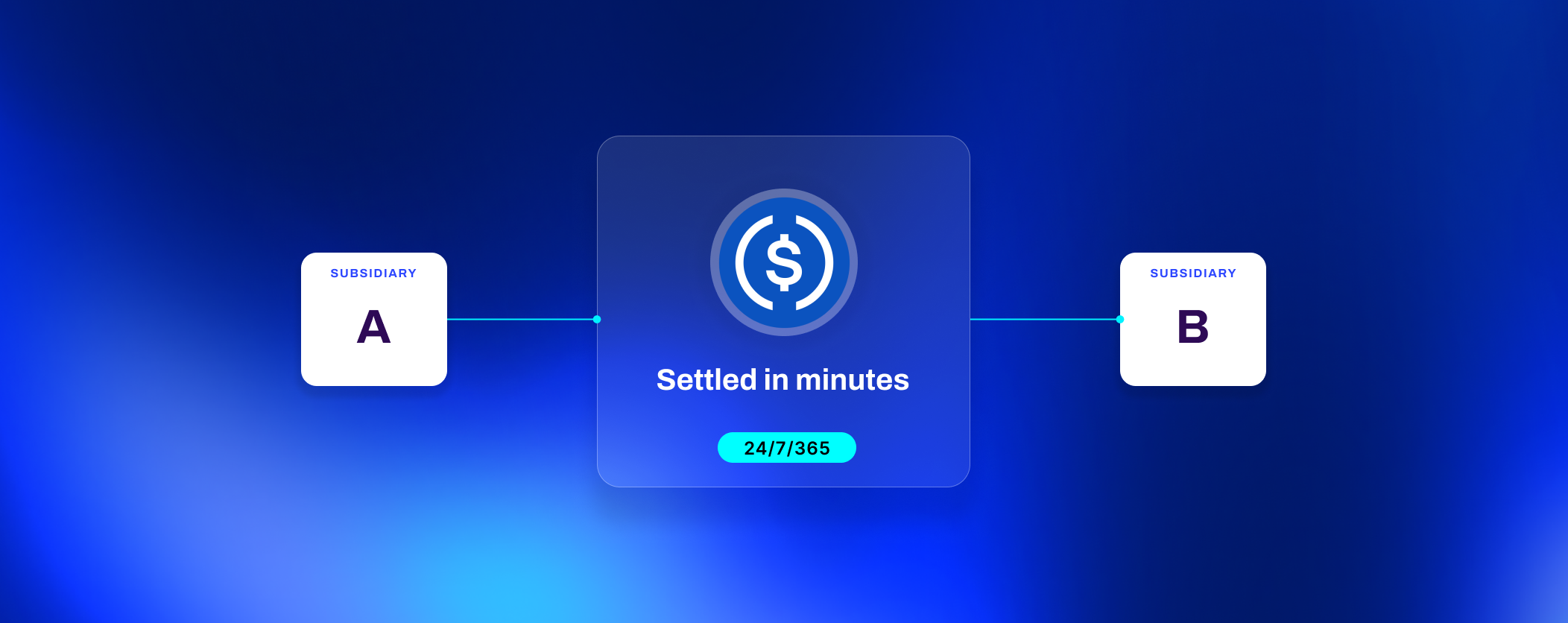
Stablecoins provide a neutral, programmable layer for moving funds between entities. Each subsidiary keeps its bank accounts and adds a stablecoin wallet held by a regulated custodian. Treasury can move funds manually, on a schedule, or by rule, with the approvals it sets. The sending entity’s currency is converted at a rate quoted upfront, funds reach the receiving entity in minutes, and that entity is paid out in its own currency or holds the stablecoin, with a single FX conversion where either currency has its own stablecoin. Both entities’ records update as soon as the transfer settles.
Because funds can move 24/7/365, subsidiaries can be funded at the moment a payment is due, with no buffers or top-ups before every weekend and holiday. Revenue can flow the other way just as easily.
Take a UK parent that needs to fund payroll at its Mexican subsidiary on Monday morning. On bank rails, treasury has to send the funds by Thursday to be sure they clear in time, and the cash sits idle over the weekend. On stablecoin rails, it can send them on Sunday evening, once the final payroll figure is confirmed, and the subsidiary receives pesos in minutes.
Where stablecoin transfers make the biggest difference
The gains are largest wherever timing has forced treasury to hold extra cash. Entities can be funded just before payroll and supplier runs go out, not days ahead. Surplus can be swept back to headquarters every day, weekends included, and intercompany invoices, fees, and loan drawdowns can settle on the day they're agreed. Entities in markets where cut-offs fall early, or where banks close at weekends and on public holidays, no longer wait for the next banking day.
Keeping control and visibility
Treasury keeps full control of how cash moves between entities, setting rules that sweep surplus balances to headquarters or top up an entity before payroll, along with the roles, permissions, and approval workflows that decide who can move funds. Rather than waiting for end-of-day bank statements, treasury can see wallet balances update as soon as a transfer settles, alongside fiat, which gives a live view of cash across every entity.
What to check before the first transfer
- Regulation - whether the provider operates under recognised payments or e-money frameworks, whether its fiat on-ramps and off-ramps are regulated in each market where your entities operate, and how it handles sanctions screening and transaction monitoring
- Custody - who holds the funds and under what legal structure, including whether wallets are bankruptcy-remote and segregated from the custodian’s balance sheet
- Jurisdictions - which of your markets allow stablecoin conversion and cross-border pooling, and where cash still has to move through regulated channels
- Reconciliation - how wallet balances and conversions flow into your treasury management system and ERP
Frequently asked questions
1. How do I handle intercompany transfers with stablecoins?
Each entity holds a stablecoin wallet with a regulated custodian alongside its local bank accounts. The sending entity converts local currency into a stablecoin, the funds move between wallets in minutes, and the receiving entity converts back or holds the stablecoin, with every transfer running through the group’s approvals and audit trail.
2. How can we make intercompany transfers faster and cheaper?
Pool and centralise payments to cut the number of transfers, then move what remains on rails that settle 24/7/365. Where either currency has its own stablecoin, a single conversion at a quoted rate also avoids the FX margins taken along a correspondent chain.
3. How long does a stablecoin transfer between subsidiaries take?
Minutes, on any day of the year, including weekends and public holidays. The same transfer through correspondent banks can take days, and it stops at local cut-offs.
4. Can treasury automate transfers between entities?
Yes. Transfers can run on a schedule or by rule, such as sweeping surplus balances to headquarters or topping up an entity before payroll, with the same approvals and permissions as a manual transfer.
5. Do stablecoin transfers change the tax treatment of intercompany flows?
No. A loan, dividend, or service charge between group entities keeps the same tax, withholding, and transfer pricing treatment whichever rail carries it.