Key takeaways
- Card issuers are settling with the networks in stablecoins - Visa began settling in USDC with US banks in December 2025, and Mastercard announced plans for stablecoin settlement in June 2026
- Acquirers are using stablecoins to settle merchants sooner - network settlement can arrive at weekends instead of waiting for banking days
- Banks are launching stablecoin services of their own - covering on-chain payout funding, FX payouts, and their own stablecoins
- Several launches are still pilots or plans - and new regimes in the US and UK start in 2027, alongside rules already in force in the EU
Stablecoins are already part of how card and bank payments settle. Visa settles with banks in USDC and Mastercard has announced plans to follow, acquirers are using stablecoins to pay merchants sooner, and banks are launching stablecoin services of their own.
Why issuers, acquirers, and banks are adopting stablecoins
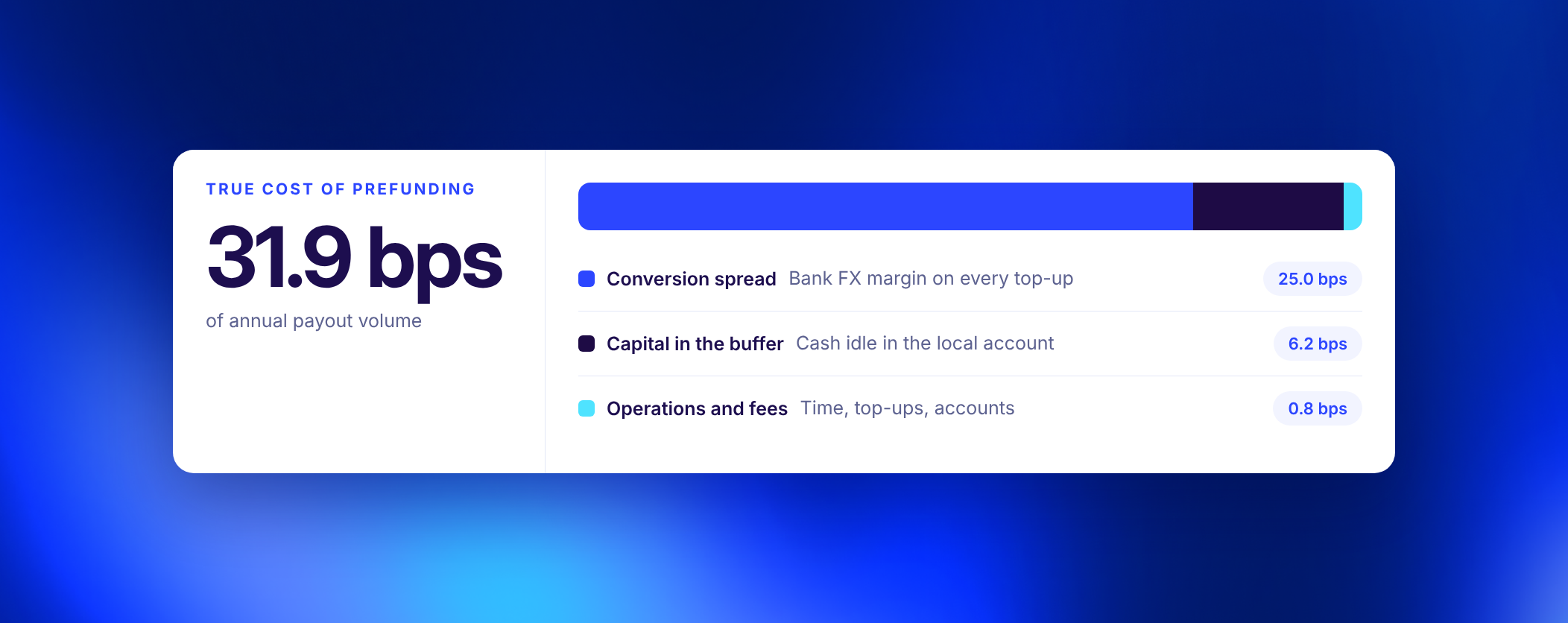
Adoption is being driven by payment businesses looking to remove structural friction from settlement. Issuers, acquirers, and banks all face the same constraint. Banking rails close at weekends and after daily cut-offs and slow down at every currency border, so each of them prefunds and holds capital idle to cover the gaps. Issuers prefund several days of card flow, and acquirers park capital in every market to pay merchants on time. Stablecoin settlement runs 24/7/365 alongside the existing card flow, so far less capital has to be held in advance.
The shift is already visible at network scale. In October 2026, Visa's stablecoin settlement volume passed a $25 billion annualised run rate, more than 10x higher than a year earlier, with more than 225 stablecoin-linked card programmes operating on its network.
Card issuers settling and funding programmes
The first place this shows up is card network settlement. Card issuers must meet Visa and Mastercard settlement on banking days, so they prefund to cover weekends and holidays, and many programmes also post collateral sized to their weekend and holiday settlement risk. Where a programme's currency isn't a supported settlement currency, funding the network also means a local FX leg. Stablecoins let an issuer meet network settlement 24/7/365, weekends and holidays included, with no bank cut-offs and no local FX leg.
The networks are already moving. Visa began settling in USDC with US banks in December 2025, with Cross River Bank and Lead Bank among the first to settle over Solana. In June 2026, Mastercard announced plans for stablecoin, intraday, holiday, and weekend settlement, with Lead Bank expected to be among the first institutions to offer it in the US.
Acquirers paying merchants faster
Acquirers face the same timing problem on the other side of the transaction. Network settlement is slow. Funds typically reach the merchant one to three days after the sale, and where the network settles in one currency and the merchant needs another, the payment passes through banks and FX desks first.
Stablecoin settlement closes that gap. Visa began piloting USDC settlement with Worldpay and Nuvei in 2023, so they could receive network settlement in stablecoins. In June 2026, Checkout.com expanded settling eligible US merchants in stablecoins with Fireblocks, getting funds to merchants at weekends.
Banks building their own stablecoin services
Banks sit behind almost every card and payment flow, as programme sponsors or as the accounts at either end, and a growing number now offer stablecoin services directly. In September 2026, MVB Bank announced it will take part in a Visa Direct pilot using stablecoins to fund and settle eligible push-to-card payouts. In October, Lead Bank launched two-way USDC conversion and FX payouts to 44 countries for its partners, running every day of the year, and Cross River embedded Ripple’s RLUSD into its core operating system, giving fintechs access through a single API, though the service is currently available only in a limited number of states.
Others are issuing stablecoins of their own. SoFi Bank issues SoFiUSD, and Société Générale-FORGE issues EURCV and USDCV under MiCA. Qivalis, backed by 37 European banks, received an e-money licence from De Nederlandsche Bank in October 2026 and plans to begin issuing a euro stablecoin in the coming months, and a group of 21 institutions including Bank of America, Citi, and Deutsche Bank plans to bring a dollar stablecoin to market in the first half of 2027.
Where the market stands today
Adoption is real but still early. Several network and bank initiatives are still in pilot or yet to launch, even as stablecoin funding for Visa Direct payouts has moved into commercial use. Financial institutions expect to move quickly, with more than two-thirds saying they already offer stablecoin services or plan to within two years. Regulatory uncertainty, once the biggest blocker to adoption, is now largely removed, with clear frameworks across the EU, the UK, Singapore, and the US and new US and UK regimes due in 2027.
How we work with issuers, acquirers, and banks
Velocity provides real-time card funding for card issuers, weekends and holidays included, either directly or through Thredd. Acquirers and PSPs use Velocity for same-day merchant settlement without prefunding, fiat in and fiat out. Financial institutions use it to offer stablecoin settlement behind their own product and, in a pilot, to fund push-to-card payouts. Stablecoin balances sit in regulated custodial wallets that are bankruptcy-remote, insured, and segregated from any custodian’s balance sheet.
Frequently asked questions
Which banks have launched stablecoin payments or settlement services?
A growing number in the US and Europe. Some, including Cross River Bank and Lead Bank, already settle card transactions with Visa in USDC. Others, such as SoFi Bank and Société Générale-FORGE, issue stablecoins of their own, and large bank consortiums are preparing euro and dollar stablecoins.
How quickly do merchants get paid with stablecoin settlement?
Sooner than the usual one to three days after the sale. Stablecoin settlement can reach the acquirer on any day, including weekends, so acquirers can pay merchants the same day, into the accounts they already use.
How do stablecoins reduce prefunding for card issuers?
An issuer can fund network settlement 24/7/365, including weekends and holidays, so it doesn't have to put up several days of funding before a weekend or bank holiday. Less capital sits idle, and less collateral may be needed against weekend and holiday settlement risk.
Do cardholders or merchants notice when stablecoins are used?
Usually not. The stablecoin leg runs in the settlement layer behind the payment, so cardholders keep the same card and merchants are paid into the accounts they already use.
Is a tokenised deposit the same as a stablecoin?
No. A tokenised deposit is a bank deposit recorded on a blockchain and remains a claim on the bank that holds it. A stablecoin is backed by a separate pool of reserves held for its holders.