Key takeaways
- Merchants usually wait days to be paid - the card network settles with the acquirer once each business day, and the acquirer pays its merchants after those funds arrive, so a sale reaches the merchant one to three business days later
- Cross-border flows add delay after the network settles - currency conversion, correspondent banks, cut-off times, and weekends all add time between the acquirer and the merchant's bank
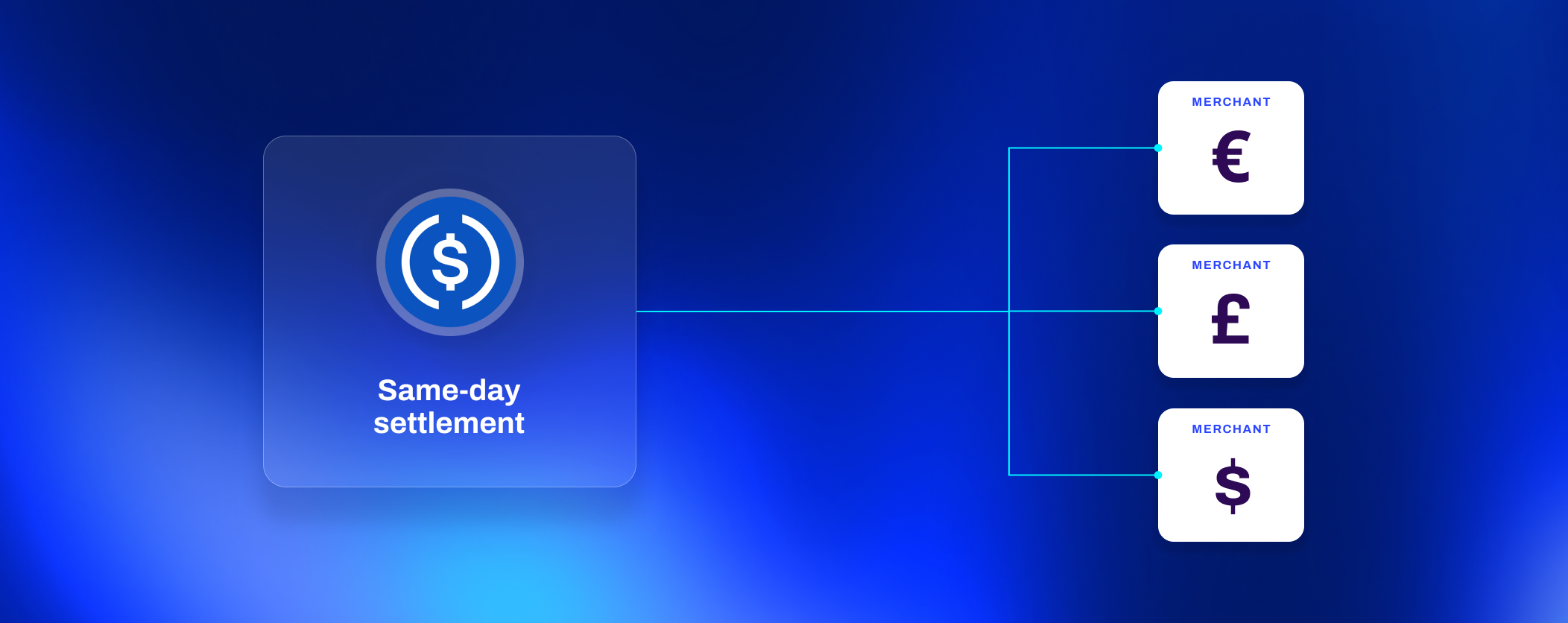
- Same-day settlement runs fiat to fiat - the day's network settlement goes in, local currency comes out, and a stablecoin carries the value in between
- Nothing changes for the merchant except the timing - they're paid in their own currency, into the bank account they already use
Why merchants wait days to be paid after a card sale
Card payments are approved at checkout and paid out to merchants later. Through the day, the acquirer batches its transactions and sends them to the card network for clearing. The network settles with each acquirer once a business day, on a net basis, and the acquirer pays its merchants once those funds arrive, usually one to three business days after the sale.
Cross-border flows take longer again. The network settles with each acquirer in the settlement currency it has chosen, converting the transaction amount at the network's own rate. That's often the local currency, but in cross-border flows it can be a major currency such as US dollars or euros, while the merchant needs to be paid in its own. The funds have to be converted, and they often pass through a correspondent bank before they reach a bank in the merchant's market. Every bank in the chain has its own cut-off time, every conversion carries an FX spread, and fees can be deducted along the way. Card settlement, and the large-value and correspondent systems that carry cross-border funds, don't run at weekends, so a sale made on a Friday afternoon may not reach the merchant until the middle of the following week.
Paying merchants sooner has meant prefunding or a credit line
Some acquirers pay merchants before the network's funds arrive, usually to meet a payout time they've promised in a market where settlement is slow. To do that they keep prefunded balances in the merchant's market or draw on a short-term credit line, then repay it when the network settles. Until then the acquirer carries the credit and liquidity exposure, as well as the interest on the line and the cost of capital sitting idle in local accounts, so acquirers tend to pay early only for select merchants. That's why waiting for settlement is still the norm.
How same-day settlement works, fiat in and fiat out
Same-day settlement closes the gap without the acquirer putting up its own money. It starts from funds the network has already settled and moves them to the merchant's bank in minutes, with a stablecoin carrying the value across the border in between.
In a cross-border flow, the network settles with the acquirer in US dollars or euros, exactly as it does today. The acquirer sends that day's settlement to its settlement provider, which converts the funds into a regulated stablecoin such as USDC, a dollar stablecoin that's redeemable one for one for US dollars and backed by cash and short-dated US Treasuries. The stablecoin settles to the provider's partner in the merchant's market in minutes, where it's converted once into local currency. The merchant is then paid over the domestic rail, into the bank account it already uses.
The acquirer sends dollars or euros and the merchant receives its own currency, so the flow is fiat in, fiat out and neither of them ever has to hold a stablecoin. The acquirer's network membership and settlement arrangements stay as they are, because the change happens after the network has paid out.
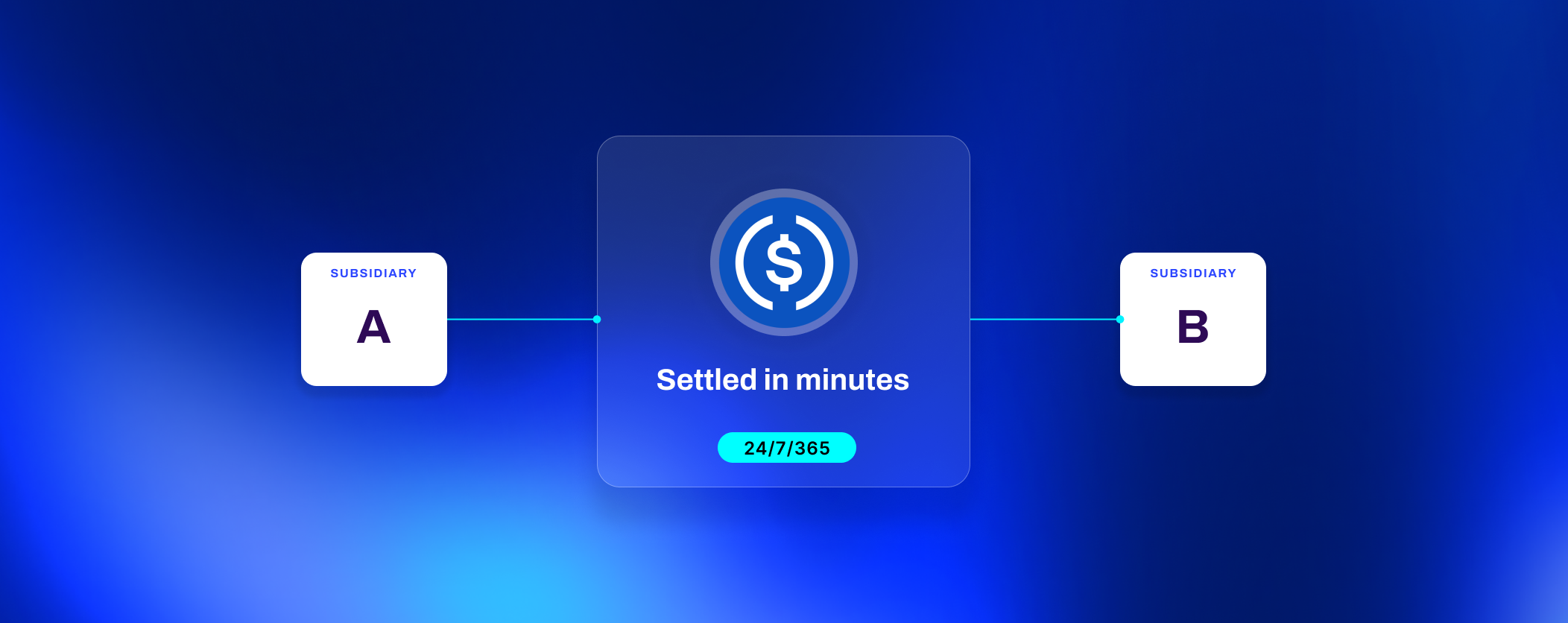
The same flow works one level down. PSPs and payment facilitators receive settlement from the acquirer and then pay their own sub-merchants, which adds another wait, and settling them the same day removes it. Where a merchant would rather be paid in stablecoins, often to hold dollars in a market with a volatile currency, the final conversion can be skipped and the stablecoin paid to its wallet instead. It's up to the merchant.
Same-day settlement pays merchants sooner without tying up the acquirer's capital
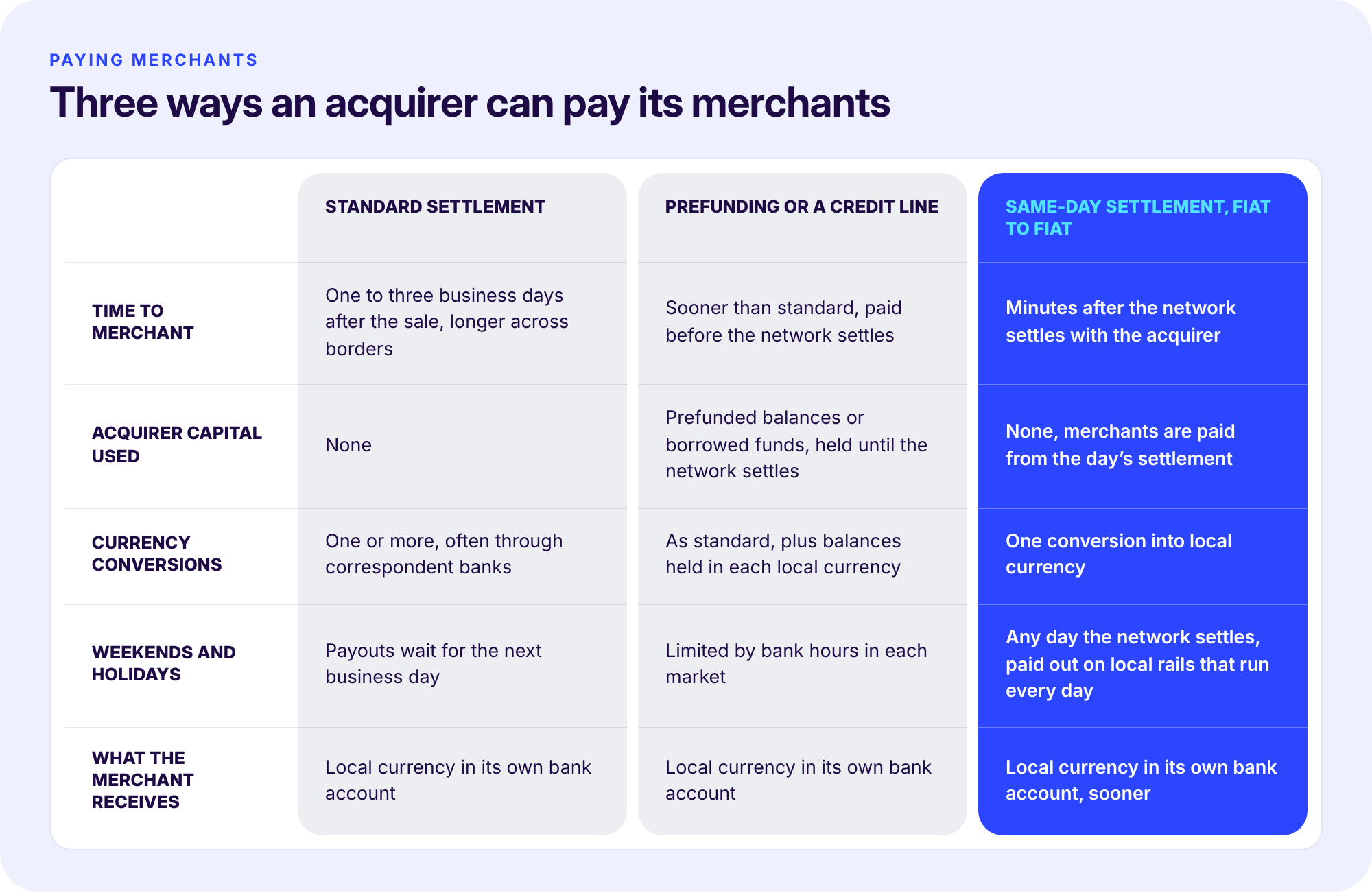
The three ways an acquirer can pay its merchants differ most in how long the merchant waits and whose money covers the gap.
Weekend payouts follow the card network's settlement calendar
The stablecoin leg runs 24/7/365, and so do many domestic rails. Pix in Brazil runs around the clock, holidays included, SEPA Instant pays euro accounts within 10 seconds at any hour, and UK Faster Payments runs day and night, 365 days a year. Others still keep banking hours; US ACH, for example, doesn't settle at weekends or on federal holidays.
The remaining limit is the network's own calendar. Card settlement has run on business days, so weekend sales usually settle on the next business day, although that's starting to change. In December 2025 Visa launched USDC settlement in the United States, starting with select partners that can now settle seven days a week instead of five, with broader US availability planned through 2026. In June 2026 Mastercard announced plans for intraday, weekend, holiday, and on-chain settlement. Where the network settles at the weekend, same-day settlement can pay merchants at the weekend too.
What acquirers should check before moving merchant settlement
An acquirer moving its settlement flows needs to see how each payout ties back to the network's settlement file, ideally through a single reference that follows the funds from the network to the merchant's bank. It should also know where the funds sit between settlement and payout, whether in an account in its own name or a regulated custodial wallet, and whether the FX rate is quoted before anything moves.
Every transfer should also be screened against sanctions lists before it settles, and where the Travel Rule applies, sender and recipient details have to travel with the payment. The acquirer should then check which domestic rails the provider pays out on in each market and how it's regulated there.
How Velocity handles same-day merchant settlement
Velocity settles merchants for acquirers and PSPs from the day's network settlement. The acquirer sends that settlement in US dollars or euros to its Velocity account, Velocity converts it once at institutional pricing, and merchants are paid in local currency in minutes, into the bank accounts they already use. It's fiat in and fiat out, with no integration needed with the acquiring platform and no change to network membership, so acquirers can eliminate prefunding and credit lines in each settlement market. Every settlement carries one reference from the network to the merchant's bank, every flow is screened in real time for sanctions and Travel Rule compliance, and any stablecoin balances sit in regulated custodial wallets that are bankruptcy remote, insured, and segregated.
Frequently asked questions
How long does card settlement take for merchants?
Most merchants are paid one to three business days after a sale. The card network settles with the acquirer once each business day, and the acquirer doesn't pay the merchant until those funds arrive, with cross-border flows and weekends adding more time.
Why are FX fees so high on cross-border card settlement?
The money is often converted more than once. The network settles with the acquirer in its settlement currency, and the funds are then converted again into the merchant's currency, often through a correspondent bank. Each conversion carries a spread, and banks along the chain can take their own fees.
Is it normal to use a credit line to pay merchants before card settlement arrives?
Some acquirers do it to meet a payout promise, but it isn't the norm. Paying before the network settles means funding the gap with the acquirer's own capital or borrowed money and carrying the credit and liquidity risk until settlement arrives. Same-day settlement pays merchants from funds that have already settled, so there's no credit line to draw.
Do merchants need to accept stablecoins for same-day settlement?
No. Merchants are paid in local currency into their usual bank account, and they don't touch the stablecoin, which only carries the value between the acquirer and the merchant's market. A merchant that would rather hold dollars can choose to receive a stablecoin instead.
Can acquirers settle merchants on weekends and holidays?
Yes, on days when the network settles and the local rail is running. The stablecoin leg runs 24/7/365, and rails such as Pix and SEPA Instant run every day. Card networks have settled on business days, but that's changing now that Visa has begun offering seven-day USDC settlement to select US partners and Mastercard has announced plans for weekend and holiday settlement.