
Stablecoins in Emerging Markets: The Next Shift Is Treasury
At London Blockchain Summit last week, Eric joined Shwetabh Sameer from Molten Ventures, Damilola Payne from MoonPay and Ruchir Dalmia from Polygon Labs to discuss how stablecoins are evolving in emerging markets.
Payments were the natural starting use case for stablecoins: They have already demonstrated that they can reduce settlement times, lower cross-border costs and provide an alternative to fragmented correspondent banking networks. In many markets, that infrastructure is no longer experimental. It is in use.
As the conversation developed, it became clear that payments are only part of the story. The more durable opportunity sits within treasury.
The hidden cost of settlement cycles
Across global commerce, large volumes of capital remain tied up in multi-day settlement processes. Funds move between counterparties, across jurisdictions and through intermediaries, often taking several days to fully settle. During that time, liquidity is effectively paused.
For businesses operating across emerging markets, this pause has real consequences. FX volatility can materially affect margins between invoice issuance and final settlement. Access to yield varies significantly by jurisdiction. Local banking rails can introduce unpredictability, particularly when moving between domestic and international systems.
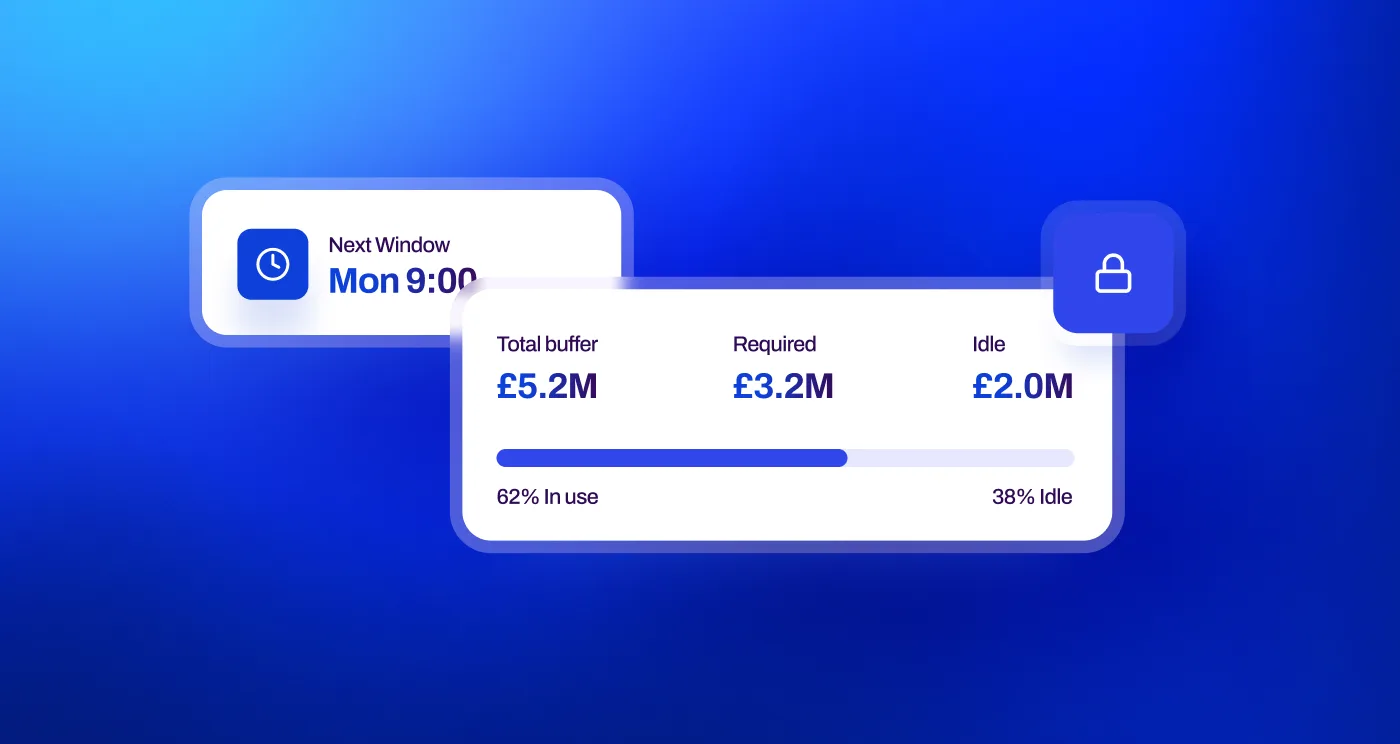
As a result, many finance teams compensate by holding larger liquidity buffers than they would otherwise prefer. That capital is not always deployed productively, and is held purely to manage timing risk.
Stablecoins address part of this by accelerating settlement. But once settlement friction is reduced, a second question emerges: What should happen to capital while it is held?
From faster movement to active management
As stablecoin infrastructure matures, treasury teams are beginning to look beyond speed.
Near-instant settlement changes the cadence of liquidity management. Instead of operating in multi-day cycles, teams can operate closer to real time. That shift affects how capital is allocated, how exposures are managed and how cash forecasting is structured.
Several implications follow:
- Operational balances can be consolidated more efficiently across regions
- Excess liquidity buffers can be recalibrated
- USD exposure can be accessed in markets where it was previously constrained
- Short-term balances can be positioned to capture prevailing base rates
None of these changes require speculation. They are extensions of existing treasury logic applied to a faster settlement layer.
The practical impact is incremental but compounding. Small improvements in settlement timing and liquidity positioning, when applied across high-volume cross-border flows, can meaningfully improve working capital efficiency.
Why emerging markets surface the opportunity first?
In developed markets, the benefits of faster settlement are often absorbed into already efficient systems. In emerging markets, inefficiencies are more visible.
Currency volatility introduces earnings variability. Banking infrastructure may not be uniform across regions. Access to global liquidity can be uneven. These factors increase the cost of capital sitting idle or misaligned.
Stablecoins provide a standardised, dollar-denominated layer that sits above local infrastructure. That layer does not replace domestic systems, but it can reduce dependence on their slowest components.
For businesses operating across multiple emerging markets, this can simplify liquidity coordination. Treasury teams gain more consistent access to settlement rails and more predictable timing. That, in turn, allows for tighter cash forecasting and more deliberate capital deployment.
Over time, the focus shifts from whether stablecoins can move money to how they can support more disciplined capital management.
Conclusion
The panel discussion reflected this broader transition. Payments are becoming table stakes. The next phase of adoption is about integrating stablecoin infrastructure into core treasury operations.
For finance teams managing cross-border exposure, the question is no longer only about cost per transaction. It is about how settlement speed, liquidity access and yield can work together within a coherent treasury strategy. That shift is quieter than the early payments narrative, but it is likely to prove more durable.